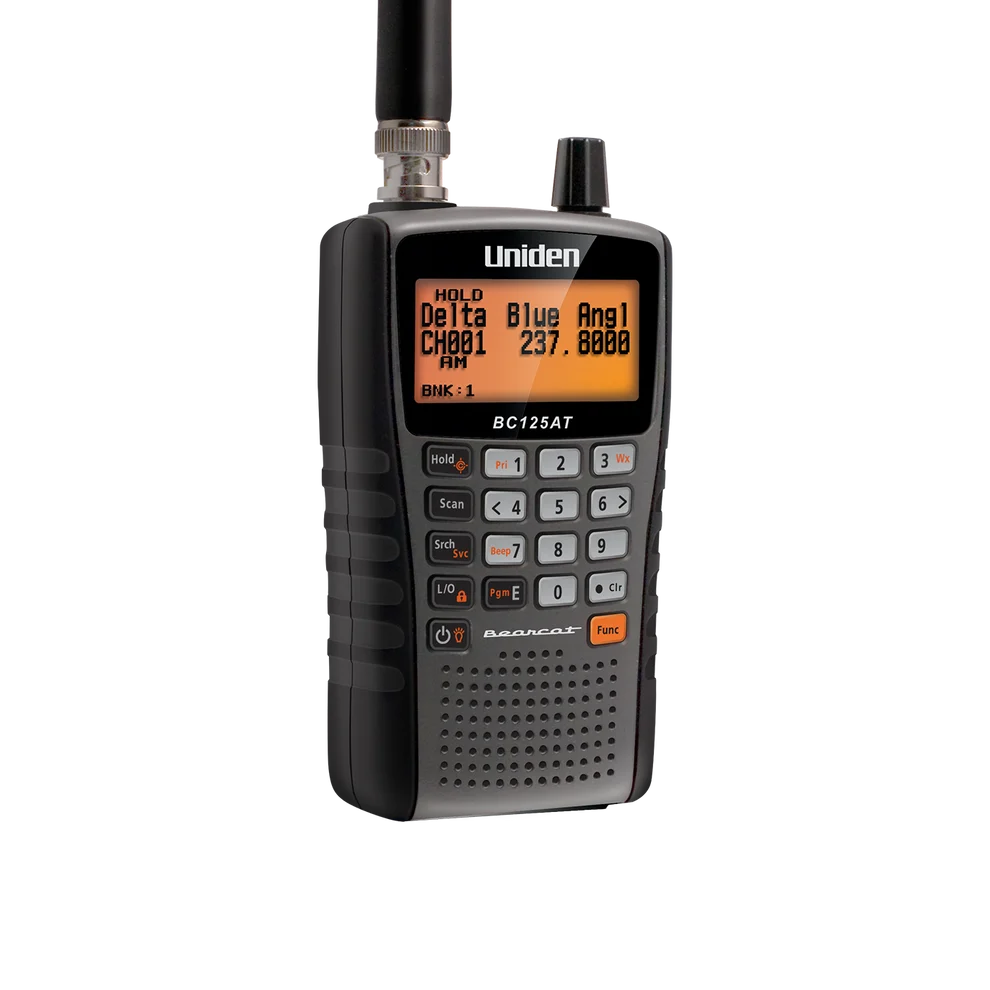
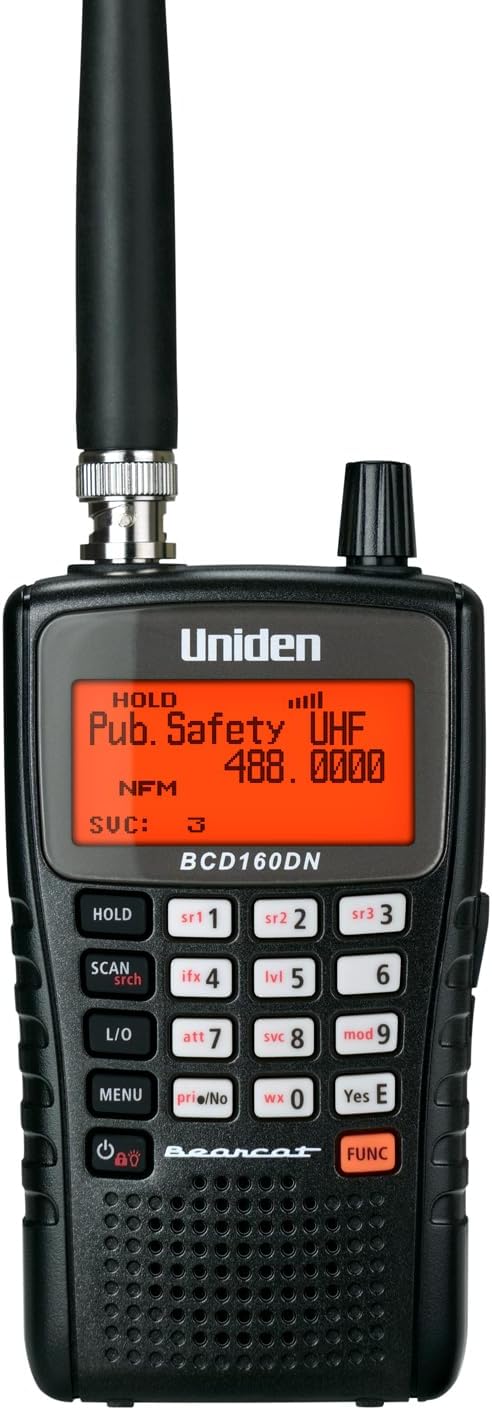
The decision is about the signals in your listening list. Conventional digital decoding can add useful possibilities, but it does not imply trunk tracking. Check current firmware and the exact supported modes before choosing the newer model for a public-safety system.
Published specifications and buying considerations
Consideration
Uniden BC125AT
Uniden BCD160DN
Format
Handheld
Handheld
Signal
Conventional analog
Analog; conventional DMR / NXDN / P25
Trunking
No
No
P25
No
Phase I/II audio decoding after firmware 2.00.03
GPS
No
Not specified as supported
Power
AA cells / USB; follow charging instructions
Rechargeable NiMH cells / USB
Programming
Keypad / BC125AT SS software
Model-specific SS software; BC_VUP3 for firmware
When Uniden BC125AT makes sense
The BC125AT is a strong analog shortlist candidate when the purpose is clearly defined: aviation, rail or other compatible conventional channels. The ability to name stored channels matters more in everyday use than a headline about thousands of possible frequencies. We would choose it for a manageable listening list that benefits from those labels and a portable format. It is not a low-cost way into a digital police network. Before selecting it, check both the frequency range and how the target service operates; a nearby agency name on a service-search button does not establish compatibility.
Start here if…
Conventional analog listening where readable channel names matter
The BCD160DN deserves careful reading because the word digital can hide its most important boundary. It is a conventional-channel receiver, not a trunk-tracking scanner. Uniden’s October 2026 firmware adds P25 Phase I/II audio decoding, but the release notes explicitly say it does not add trunk tracking. That makes the radio potentially useful for a defined set of conventional digital channels and a poor choice for someone shopping by the P25 label alone. We would recommend it only after confirming how the target communications are organised, with the installed firmware checked before evaluating what it receives.
Start here if…
Listeners whose required digital channels can be monitored conventionally
Reconsider if…
You need a receiver to follow conversations across a trunked system
Put the required accessories, enabled protocol options and programming tools alongside the receiver. Check the current manufacturer documentation and seller’s included-items list. We do not show live prices or assume an optional upgrade is included in a listing.
For a fixed installation, think through antenna position, cable and power. For portable listening, check battery arrangements, carrying size and charging. A small difference on the specification sheet can create a different daily routine.
Match your choice to local systems
Check the radio system you want to hear, its encryption status and the receiver’s supported operation. Antenna position, local terrain and installation also influence reception, so plan the complete setup alongside your scanner choice.