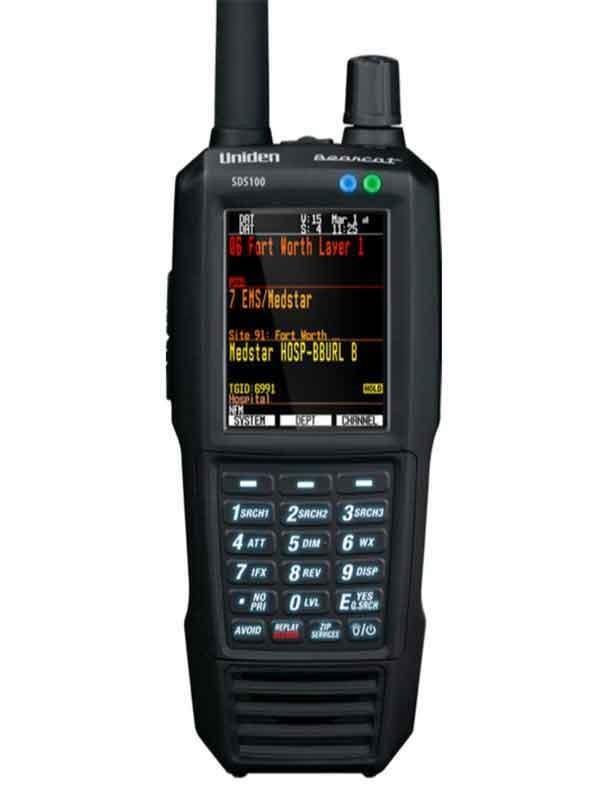
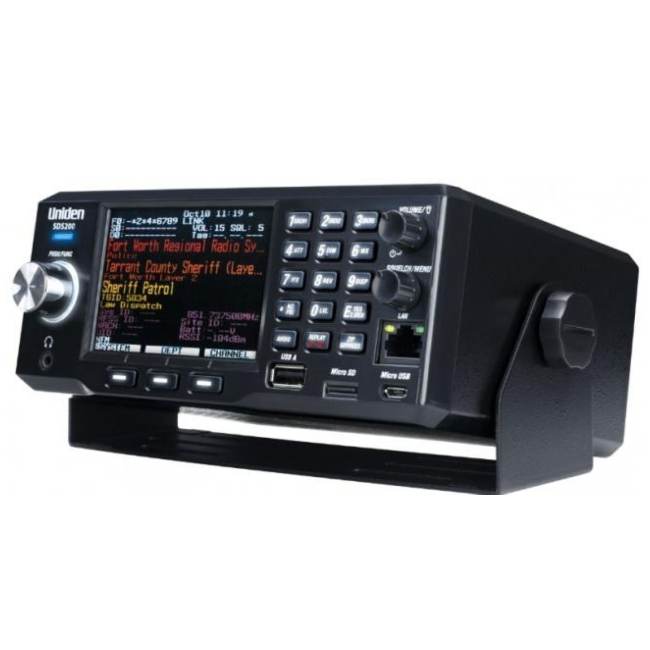
Choose the SDS100 when carrying the receiver is central to your listening. Choose the SDS200 when you are building around a desk or an installed position. Start by checking your local system; then account for battery operation, physical space, power and antenna placement.
Published specifications and buying considerations
Consideration
Uniden SDS100
Uniden SDS200
Format
Handheld
Base / mobile
Signal
Analog + digital
Analog + digital
Trunking
Yes — supported systems
Yes — supported systems
P25
Phase I & II
Phase I & II
GPS
External receiver required
External receiver required
Power
Dedicated rechargeable battery
External AC / DC
Programming
Sentinel / HomePatrol database
Sentinel; HomePatrol database
When Uniden SDS100 makes sense
The SDS100 is a sensible starting point when your shopping problem is portable digital monitoring, especially if local simulcast is part of the decision. Its significance is the receiver design and supported systems, rather than a huge channel-count claim. We would shortlist it for someone who has already checked the systems they want to hear and expects to use the radio away from a desk. It is excessive for many analog-only tasks. Reception depends on your local system, antenna position and installation, so check those alongside the SDS100’s system support.
Start here if…
Listeners who need a portable P25 scanner and want to evaluate the SDS receiver design for local simulcast
Reconsider if…
You only need a few conventional analog channels, or your target communications are encrypted
The SDS200 is our installation-first SDS choice. Consider it when a radio will stay at a desk or in a properly planned vehicle setup and portability would add little. Its larger display, external power and Ethernet connection suit a listening station that you can organise around the receiver. The buying question is not whether a bigger scanner hears further: antenna placement, the local system and the receiver’s capabilities remain separate issues. We recommend comparing it with the handheld SDS100 on how you will use it, then checking whether the digital-system features are justified for your area.
Start here if…
A fixed listening station or an installed mobile setup
Reconsider if…
You need a battery-powered scanner to carry between locations
Put the required accessories, enabled protocol options and programming tools alongside the receiver. Check the current manufacturer documentation and seller’s included-items list. We do not show live prices or assume an optional upgrade is included in a listing.
For a fixed installation, think through antenna position, cable and power. For portable listening, check battery arrangements, carrying size and charging. A small difference on the specification sheet can create a different daily routine.
Match your choice to local systems
Check the radio system you want to hear, its encryption status and the receiver’s supported operation. Antenna position, local terrain and installation also influence reception, so plan the complete setup alongside your scanner choice.