
THE SHORT VERSION
Our verdict
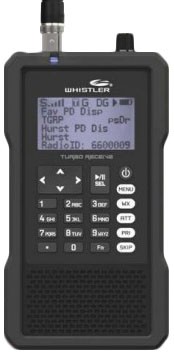
The TRX-1 is the Whistler handheld to compare when you need a broader supported digital-format set than the WS1040 offers. Its database and EZ Scan workflow also represent a different ownership approach. We would shortlist it for a known set of unencrypted systems, then examine exactly how those systems are handled rather than assuming every format label means identical trunk-tracking behaviour. Its documentation supports a substantial feature list; it does not provide a reception guarantee for your local simulcast environment. The purchase decision should include setup preferences, software access and the radio’s intended locations.
A good fit for
Listeners who want a Whistler handheld covering supported P25, DMR and NXDN traffic
Consider something else if
You expect every digital system or local simulcast site to work without checking
Reasons to consider it
- P25 Phase I/II plus documented DMR/NXDN support
- Database and settings stored on microSD
- Scan lists and recording for a structured listening workflow
Trade-offs to know
- System-specific behaviour still needs verification
- Do not assume SDS-style simulcast receiver design
AT A GLANCE
The important details
- Format
- Handheld
- Signal
- Analog; P25 / DMR / NXDN digital
- Trunking
- Supported systems; verify exact DMR/NXDN behaviour
- P25
- Phase I & II
- GPS
- No integrated GPS workflow specified
- Power
- AA cells / USB; follow manual
- Programming
- EZ Scan / microSD database
Specifications are drawn from the linked documentation. Confirm the exact model, current firmware and included accessories with the manufacturer before purchase.
Format breadth needs a system-level check
Whistler identifies P25 Phase I/II, DMR and NXDN among the supported digital formats. That is a useful starting point, but the implementation matters as well as the label. For DMR and NXDN networks, verify the current manual, firmware and expected monitoring behaviour for the particular system. A broad compatibility headline should not be interpreted as a guarantee that every variant is followed in exactly the same way.
The database and scan-list approach
The TRX-1 stores its database and programming on microSD and uses EZ Scan for management. Our recommendation is to build lists around the sessions you actually listen to: local public services, a specific journey or an event. Keep a backup before major software or programming changes. The ability to store many objects is useful for organisation, but does not mean all of them should be active in every listening session.
Plan portable use and recording
A handheld should fit how you carry, power and listen to it. Read the model’s battery and USB instructions rather than assuming that all AA-based scanners charge and operate the same way. Recording can be useful for revisiting received traffic, but a recording feature does not establish that a missed or encrypted transmission can be recovered. Choose a storage and power routine that you can maintain without turning each listening session into a setup task.
How to compare it fairly
The TRX-2 is the installed-format alternative within this family. The SDS100 is worth evaluating if a challenging simulcast system is central to the buying decision. The WS1040 is narrower and may be sufficient for a confirmed Phase I requirement, but should not be substituted when Phase II is needed. We would select the TRX-1 because its specific support and workflow fit the target list, rather than because a single all-purpose digital ranking puts it above another radio.
A practical check before ordering
When comparing an offer, ask whether programming means a reusable configuration with documented scan lists or simply loading a large regional selection. The former is easier to maintain as your interests change. Check that you have access to a computer environment suitable for the current software. A database-equipped radio still needs an ownership workflow that fits the person who will manage it.
Accessories with documented model fit
These links use the exact-model source records. Read the individual fit and electrical requirements before ordering; a listed connector or model does not establish every use case.
- Whistler 800 MHz tuned antenna — A focused alternative for compatible handhelds
- Whistler four-inch handheld antenna — Keep the handheld arrangement compact
- Whistler TRX-1 protective case — A fitted cover for the TRX-1 family
What else belongs on your shortlist?
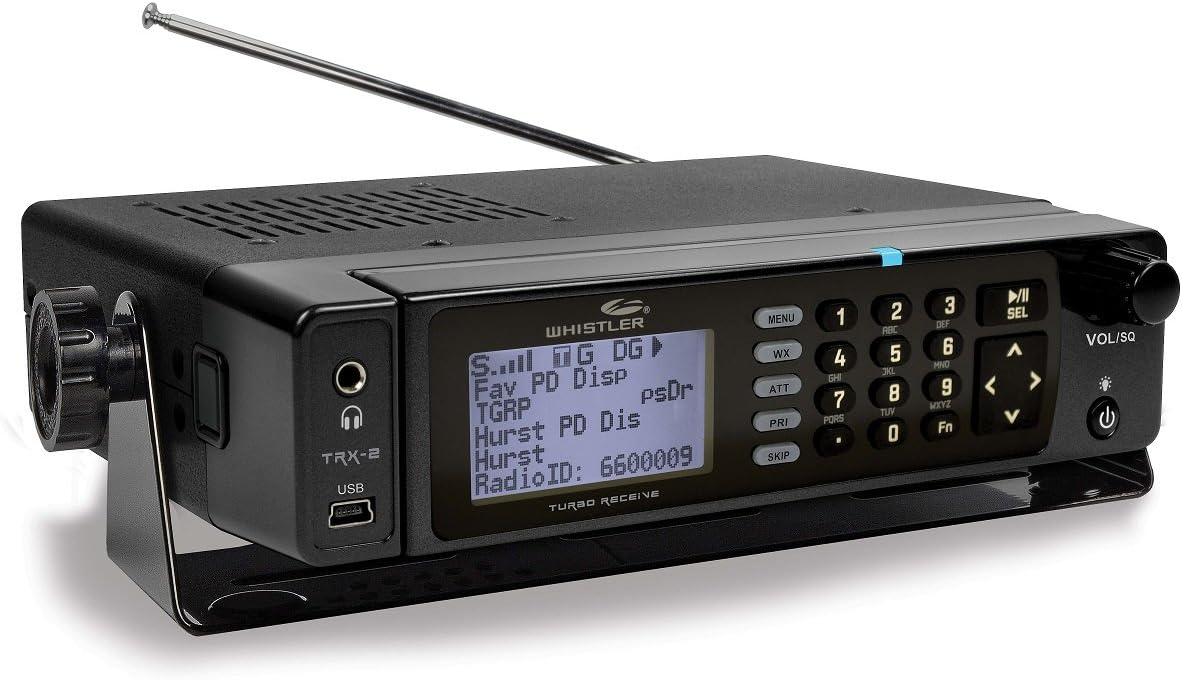
An installed setup where separating the display from the receiver is useful
Remote-head cabling must be planned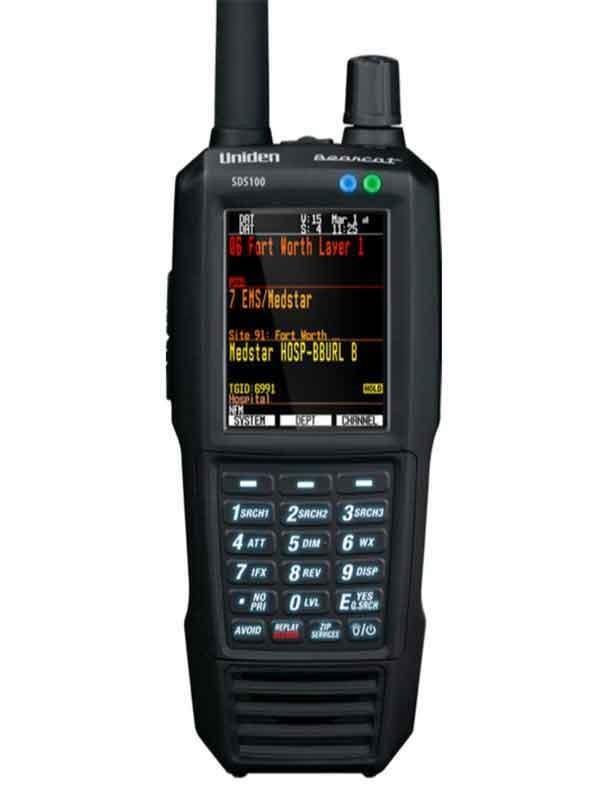

Listeners who need a portable P25 scanner and want to evaluate the SDS receiver design for local simulcast
External GPS adds hardware and cablingCHECK THE EVIDENCE
Sources & specifications
- Whistler TRX-1: manufacturer specifications ↗Checked 2026-11-06
- TRX-1 owner manual ↗Checked 2026-11-06
How we choose and compare scanners. Match the model’s capabilities to your local radio systems before buying.